
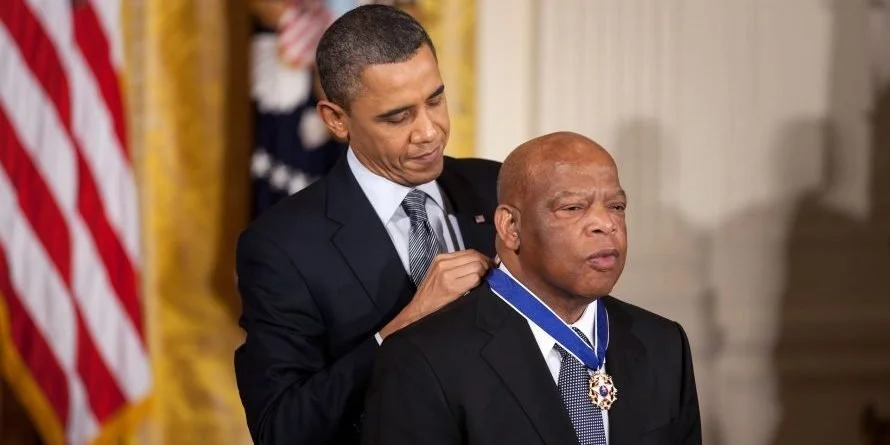
Continuing the Legacy of John R. Lewis
John R. Lewis was one of the most important figures in the American Civil Rights Movement and a long-serving member of the U.S. Congress. His legacy spans both historic activism and decades of legislative work.
During the 1960s, Lewis became a key leader of the Student Nonviolent Coordinating Committee (SNCC), helping organize sit-ins, freedom rides, and voter registration efforts in the segregated South. He is best known for his role in the 1965 Selma to Montgomery marches, especially “Bloody Sunday,” when peaceful protesters were violently attacked while crossing the Edmund Pettus Bridge. That moment helped galvanize national support for the Voting Rights Act of 1965.
After his activism years, Lewis served in the U.S. House of Representatives from 1987 until his death in 2020, representing Georgia’s 5th congressional district. In Congress, he became widely known as the “Conscience of the House” for his moral leadership and commitment to civil rights, voting access, and social justice.
Key Accomplishments
Help lead the Selma marches that directly contributed to the Voting Rights Act of 1965
Served over 30 years in the U.S. House of Representatives
Advocated for civil rights, voting rights, immigration reform, and healthcare access
Received the Presidential Medal of Freedom in 2011
Authored the acclaimed graphic novel trilogy March, which documents his civil rights experiences and educates new generations
Lewis is remembered for his philosophy of “good trouble,” encouraging people to take peaceful, necessary action in the face of injustice. His life’s work helped reshape American democracy and expand voting rights protections.